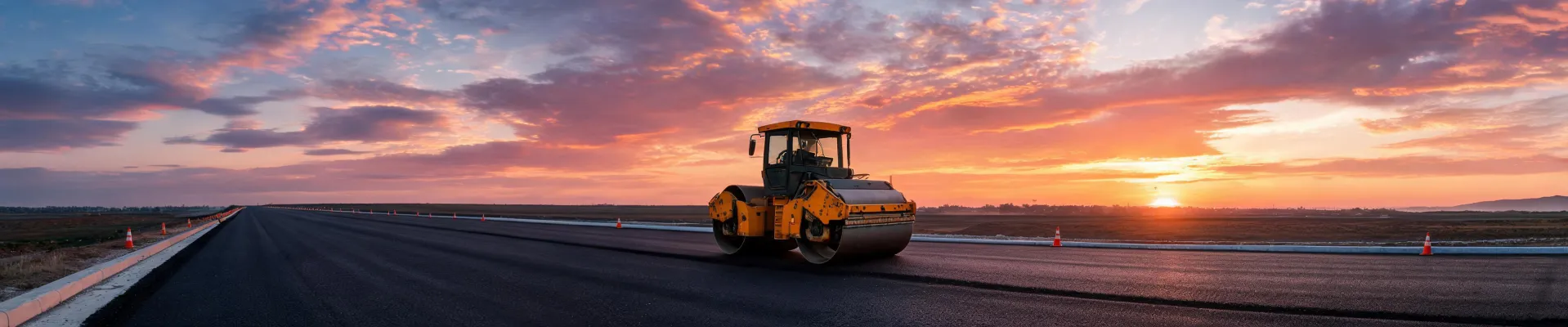
If you're buying Dynapac parts or sourcing a roller compactor or paver, here's the answer in one sentence: buy through an authorized Dynapac dealer and make every decision based on total cost of ownership, not ticket price. I've watched a $90 part turn into a $2,400 repair, and a $300 price difference create $18,000 in downtime. In my role as a parts and service procurement manager at an authorized Dynapac dealership, I've handled more than 200 rush parts orders in eight years. The pattern is consistent.
That's the conclusion. The rest is the why and the how.
Why 'where do I buy Dynapac parts' is a TCO question
From the outside, ordering a Dynapac part looks like an inventory task: find the part number, compare prices, click buy. The reality is different. You're actually managing risk—fitment risk, delivery risk, and the risk of a failed part taking other components down with it.
People assume the lowest quote means a leaner supplier or smarter buying. What they don't see is what's being hidden or deferred: no serial-number verification, no technical help, and no one to call when the part shows up with the wrong revision. Most buyers focus on price and completely miss availability, warranty, and installation support.
Here's the thing: total cost of ownership includes the base price, freight, rush fees, technician labor, and the cost of a wrong part. If a part is wrong, you don't just lose the part price—you lose the machine time, the crew waiting, and sometimes the next project's reputation. The $80 savings from an unverified part can easily disappear into a $5,000 repair bill.
I'm not 100% sure of the exact percentage, but in my experience, most urgent parts problems are fitment or compatibility issues, not manufacturing defects. The part was right by part number, but wrong by machine serial number, or wrong revision, or wrong for the environment.
What to ask before you order Dynapac parts
When I'm triaging a rush order, I ask four questions before anything else:
- What is the machine's serial number? Model alone is not enough.
- When does the part need to be on the job site—and what happens if it's late?
- Who is installing it? A dealer technician or a customer crew?
- Does this part have a compliance, warranty, or safety-critical role?
Most buyers focus on the part number and completely miss the serial-number break. Dynapac has made design changes at specific serial points. A pivot pin or hydraulic hose for one series can look identical to another but have a different spec. I assumed a part was interchangeable once. Didn't verify. Turned out the torque spec changed, and we saw accelerated wear after installation. We replaced it with the OEM-correct part, and the problem went away.
Another quiet killer is communication. I said 'expedited freight,' and the customer heard 'guaranteed by 6 AM.' We were using the same words but meaning different things. Discovered this when the truck showed up at 2 PM. Now I always ask, 'What hour do you need it?' and 'What's the cost if it's late?' Contractors who answer those two questions make better sourcing decisions.
Roller Compactor Sourcing: Dealer Support Is Part of the Machine
When you're sourcing a roller compactor, don't start with the machine's drum width or seat comfort. Start with the support infrastructure behind it: local parts stock, dealer response time, and the people who know the machine's history. For Dynapac equipment, that support means using an authorized Dynapac dealer rather than a random parts listing.
In March 2024, 36 hours before a county road project started, a contractor called about a vibratory roller with a failed eccentric bearing. Normal parts lead time was six days. We airfreighted the bearing from the regional Dynapac parts center, paid $820 in freight, and had the machine running by 4 AM. The client's alternative was a $2,300-per-day penalty plus four hours of crew idle time. That's $820 spent to avoid a much bigger number. This is what I mean by total cost thinking.
When comparing quotes from different suppliers, ask what response time they can actually commit to. A dealer with warehouse access and a parts specialist can often verify fitment while you're on the phone. A parts website cannot. The machine's availability, not the part's price, will make or break your project schedule.
Paver Distributor Relationships and Paver Compliance Requirements
Pavers are a different risk profile. When you buy through a paver distributor, you're not just buying steel and hydraulics—you're buying the ability to put that machine to work legally and keep it working. That's where paver compliance requirements enter the picture.
Compliance requirements vary by market, but in general they include engine emissions, noise limits, safety guarding, and road transport permits. In the U.S., most diesel-powered pavers need to meet EPA non-road Tier 4 emissions standards (Source: EPA, epa.gov; verify current requirements). In California, CARB adds its own certification and labeling requirements. In Europe, new pavers require CE marking under the EU Machinery Directive and must meet the EU Noise Directive (Source: European Commission, ec.europa.eu; verify current requirements).
The question everyone asks is 'What's the best price?' The question they should ask is 'Does this machine have the right certificates for the job sites I actually work on?' A paver might be compliant in one state and blocked in another. If the machine is stopped at the project gate, the cost is not a paperwork inconvenience—it's idle crew time, rental replacement costs, and a ruined schedule.
An authorized Dynapac dealer can help you here. A dealer can pull the OEM certificate file, check the machine serial number against emissions conformity, and advise on road transport regulations. That is a TCO advantage, not a 'dealer tax.' A paver without compliance documentation is worth less, because you will have to spend time and money to prove what it is.
When 'Dealer-First' Isn't the Right Answer
I'll be honest: dealer-first isn't always the lowest-TCO move. For a non-critical wear part with no serial-number dependency, and if your own team can verify fitment, a non-OEM part might be perfectly fine. I do not say that to sell you on aftermarket parts. I say it because the total-cost framework only works if it's honest.
If your machines are out of warranty and you have strong in-house diagnostics, a local parts supplier can sometimes get a part to you faster than a dealer order from a central warehouse. The key is to make the decision based on verified fitment, a confirmed delivery date, and a fallback plan—not just price.
Also, used and rental equipment change the math. If you're renting a Dynapac roller or paver, the rental company should have dealer support and compliance documentation in place. If they don't, that's a red flag. If you're buying used, ask the seller for the same compliance docs and dealer service history. Missing paperwork in a used purchase is a negotiating point, but it's also a future cost.
Here's the short version. Start with an authorized Dynapac dealer for parts and machine sourcing. Use total cost, not ticket price, as your decision filter. For pavers, treat compliance documentation as a zero-compromise requirement. Do that, and you'll avoid most of the expensive surprises I've seen in eight years of rush orders.
Look, I'm not saying every dealer quote will be the lowest number on the screen. Sometimes it won't be. But the 'cheapest' quote is only cheap if everything goes right. And in construction equipment, things rarely go right by accident.
Simple? Doesn't mean easy. But it's the closest thing to a shortcut that actually works.