Application Solutions

Match Dynapac Compaction Trains to the Pavement Problem You Must Solve

Highway overlays, municipal streets, airport edges and industrial hardstands each impose different compaction force, drum diameter and vibration frequency constraints — we map roller classes to those constraints before you bid.

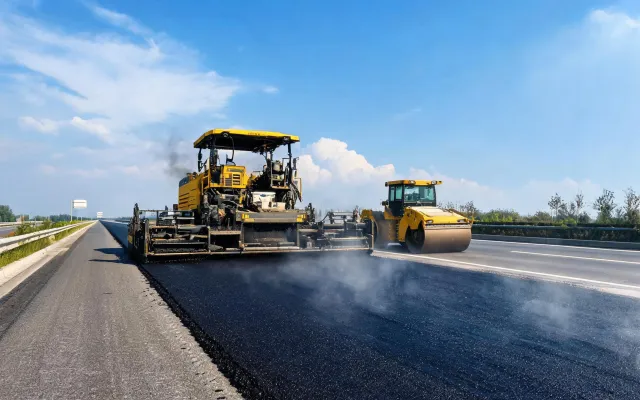
Asphalt paving train with Dynapac rollers following paver

Four Paving Problems, Four Compaction Configurations

Each scenario lists the density target language paving engineers use, plus the Dynapac machine mix that typically closes the window.

Night Highway Overlay

When mat temperature drops fast under wind, tandem rollers with dual amplitude and intelligent pass-count maps keep asphalt density inside MoE bands without adding blind rework passes after midnight.

  • Primary: 10–14 t tandem vibratory roller
  • Finish: pneumatic tire roller for kneading
  • Control: compaction-meter value + GNSS path

Municipal Curb Reconstruction

Narrow lanes and utility cuts need plate compactors and compact tandems that hold edge confinement while crews restore binder and wearing courses beside live traffic.

  • Primary: plate compactor + 3–5 t tandem
  • Water-spray & edge-guard packages
  • Low ground pressure for adjacent sidewalks

Airport Taxiway Edges

High-modulus asphalt and FOD discipline demand pneumatic tire rollers with documented tire pressure matrices and clean-water spray systems approved for airside work windows.

  • Primary: pneumatic tire roller
  • Support: tandem for breakdown rolling
  • Docs: airport density & FOD checklist

Industrial Hardstand Base

Cohesive fills under forklift slabs respond to padfoot compactors with controlled moisture windows so gradeability and ground pressure stay predictable before concrete or asphalt capping.

  • Primary: padfoot / soil compactor
  • Lift thickness & moisture logging
  • Static line load verified per lift

How We Translate a Bid Spec into a Roller Class

A short decision path Dynapac application engineers run with estimators before recommending drum diameter and vibration frequency.

1

Capture the density language

Percent of laboratory Marshall / Superpave density, nuclear gauge tolerances and lift thickness from the project specification.

2

Map temperature & width

Mat cooling rate, paving width and night-versus-day windows decide whether oscillation, high amplitude or pneumatic finish is required.

3

Lock the train

Breakdown, intermediate and finish rollers sized so compaction force and vibration frequency cover the tonnage without starving the paver.

Request an Application-Matched Compaction Train

Share your density target, paving width and night-window constraints — Dynapac application engineering replies with a class recommendation.