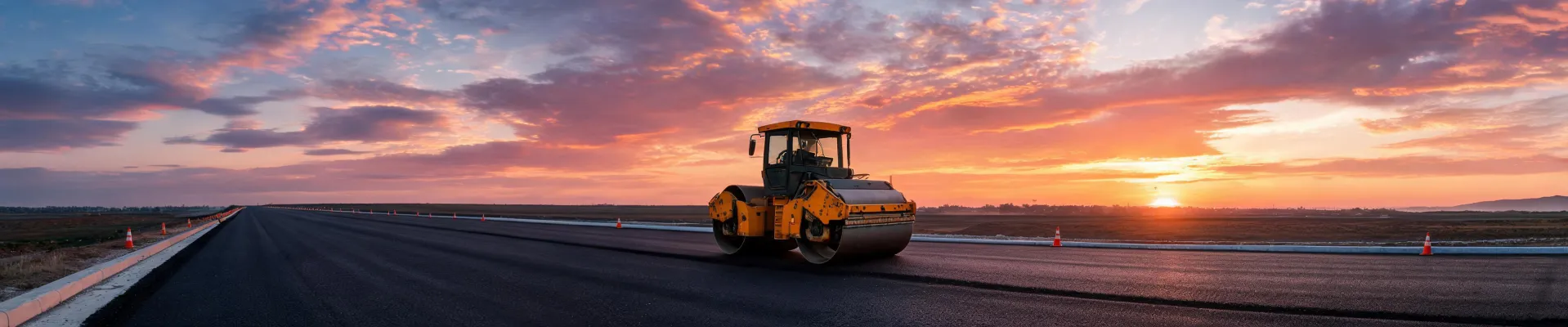
I was on my second coffee on April 11, 2023, when my phone buzzed with a text from the project manager on our Mississippi highway widening job. One of their Dynapac CA250 rollers needed a new track roller—fast. They wanted it on-site by Friday.
Eight years handling compaction equipment parts orders. I've personally made—and documented—eleven significant mistakes totaling roughly $47,000 in wasted budget. By 2023, I figured I'd seen most of the traps. This order looked routine: one track roller, one machine, one deadline.
It was not routine.
Background: Why Mississippi Changed the Rules
We supply Dynapac parts to a handful of dealers and contractors across Mississippi and Louisiana. Mostly road work—rollers, compactors, the occasional asphalt paver. The Dynapac parts volume had grown steadily because we were reliable and we kept the right specs on file. Thank goodness I've kept every spec sheet, by the way—three years later, I'd need them.
The customer in this case was running a state DOT-funded project. That detail matters more than I realized at the time. In Mississippi, any machine operating on a state-funded job site has to pass compliance checks—and those checks don't just look at the part. They look at the paperwork trail behind the part.
I knew the rule existed. I just didn't think it applied to a track roller.
The Order That Went Sideways
I did what I always do: pulled OEM pricing on the Dynapac track roller, then checked aftermarket options because the client kept mentioning budget. Several suppliers listed "OEM-compatible" track rollers. Same outer diameter, same width, same bearing configuration. Price was about 40% lower.
I made a judgment call. Aftermarket parts are fine in plenty of situations—I'm not going to pretend they're not. The client was in a hurry. The savings were around $1,300. I ordered the aftermarket part.
It arrived on time. I inspected it. Looked correct. The box said "OEM-compatible," the spec sheet listed matching dimensions. I shipped it to Mississippi. The client installed it.
Ten days later, the phone rang.
The Compliance Problem I Didn't See Coming
The state inspector had flagged the part—not for fit, not for function. For documentation. The aftermarket track roller came with a generic certificate in the box, no manufacturer traceability, no batch-level material records. Under the project's compliance requirements, that wasn't enough. The part had to come off the machine, and a replacement with a full documentation chain had to go on.
Four days of downtime. The aftermarket roller cost $1,900. The rush replacement cost $3,200. Combined with the schedule hit, we were looking at roughly $4,200 in real losses—plus a dent in the PM's trust that took months to smooth over.
I remember the exact date I sent the apology email to my team: April 14, 2023. It was a Friday. I don't send apology emails on Fridays anymore.
What I Got Wrong—and Why I'd Been Getting It Wrong for Years
Here's the thing I kept circling back to. I'd spent years thinking of OEM versus aftermarket as mainly a quality-and-price tradeoff. OEM = better, more expensive. Aftermarket = decent, cheaper. Pick based on the job.
That framing comes from an era—maybe 2010 to 2017—when most parts orders didn't need deep traceability. The part fit or it didn't. That era is over for anyone touching public infrastructure work.
I now believe—and this took me about three years and 200 or so orders to really internalize—that compliance documentation is not a separate thing from the part. For state DOT jobs, municipal contracts, and federally-funded projects, the paperwork is part of the product. A track roller without a real documentation chain isn't a late or incomplete track roller. It's the wrong part for that job.
According to the FTC's advertising guidance (ftc.gov), "compatible" claims have to be truthful and not misleading—which sounds obvious until you're the one assuming "OEM-compatible" means the same thing as "OEM-documented." It doesn't. Those are two different claims.
The Checklist That Came Out of It
I wrote this the week after the Mississippi job closed. It's on a laminated card taped to my monitor. Any track roller or compaction part order for a project site goes through it:
- What's the project type? State DOT, federal-aid, municipal, or private? This determines everything downstream.
- What documentation will the site inspector require? Manufacturer name, batch number, material certs, ISO 9001 chain—get the specific list before quoting.
- Does the supplier provide that documentation at the quoted price? Not "can they"—does the quote include it?
- What's the true cost gap between OEM and aftermarket? Not the invoice gap. The invoice gap plus the risk of a compliance rejection.
- If it fails inspection, what's the recovery cost? Hint: it's never just the part price. It's the part, the rush replacement, the downtime, the PM conversation.
The $1,300 I "saved" on that initial quote turned into $3,900 in real costs and four lost days. If I'd asked those five questions, I might still have bought the aftermarket roller—but I would have told the customer upfront about the documentation limits. They could have made their own call. That's the whole point.
What I Tell Clients Now
When someone asks me "do I need OEM Dynapac parts or is aftermarket fine?"—and I get that question almost weekly—I don't answer it directly. I ask about the job site, the funding source, and the inspection requirements. Because the honest answer is that OEM versus aftermarket isn't the real question. The real question is: what does this specific job require, and can I back up whatever I ship?
Roller compactor private label options exist, and some are perfectly fine for private-site work where a generic cert will pass. On a Mississippi DOT job? Different story. Track roller compliance requirements aren't a formality. They're the reason the part is on the machine.
If I could leave one sentence for anyone handling compaction OEM parts, it's this: the physical part may match perfectly, but the paperwork chain is a separate deliverable—and on infrastructure work, it's not optional.
Prices and cost figures cited are from our internal project records, Q2 2023. Verify current compliance requirements with the relevant DOT or project authority before ordering.